
EWP Rescue Simulator
An internal elevated working platform (EWP) rescue simulation tool, built with Unity WebGL for browser delivery.
← All projects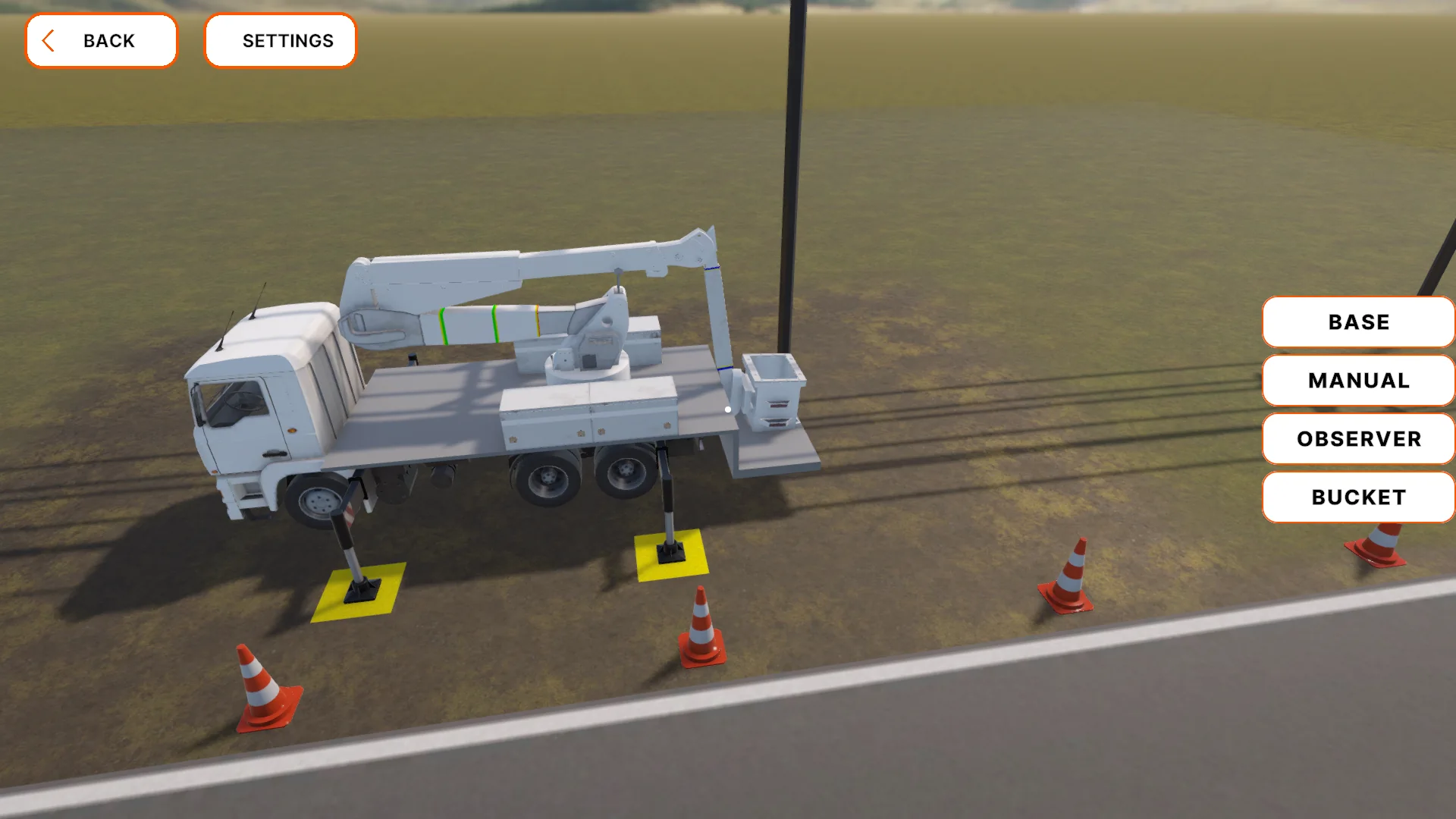
- Client
- Large Energy Provider in Australia
- Duration
- Feb 2026 - Oct 2026
- Engine
- Unity
- Platforms
- WebGL / Browser
Project Summary
XGameDev developed an internal elevated working platform (EWP) rescue simulation tool for a large energy provider in Australia between February and October 2026. The Unity WebGL application represents a 3D worksite where users can operate EWP controls and explore configured rescue scenarios in a browser.
Our work covered the simulator's control systems, scenario configuration, result data model and WebGL build pipeline. The tool brings equipment behaviour and configurable rescue procedures into one interactive environment.
The Challenge
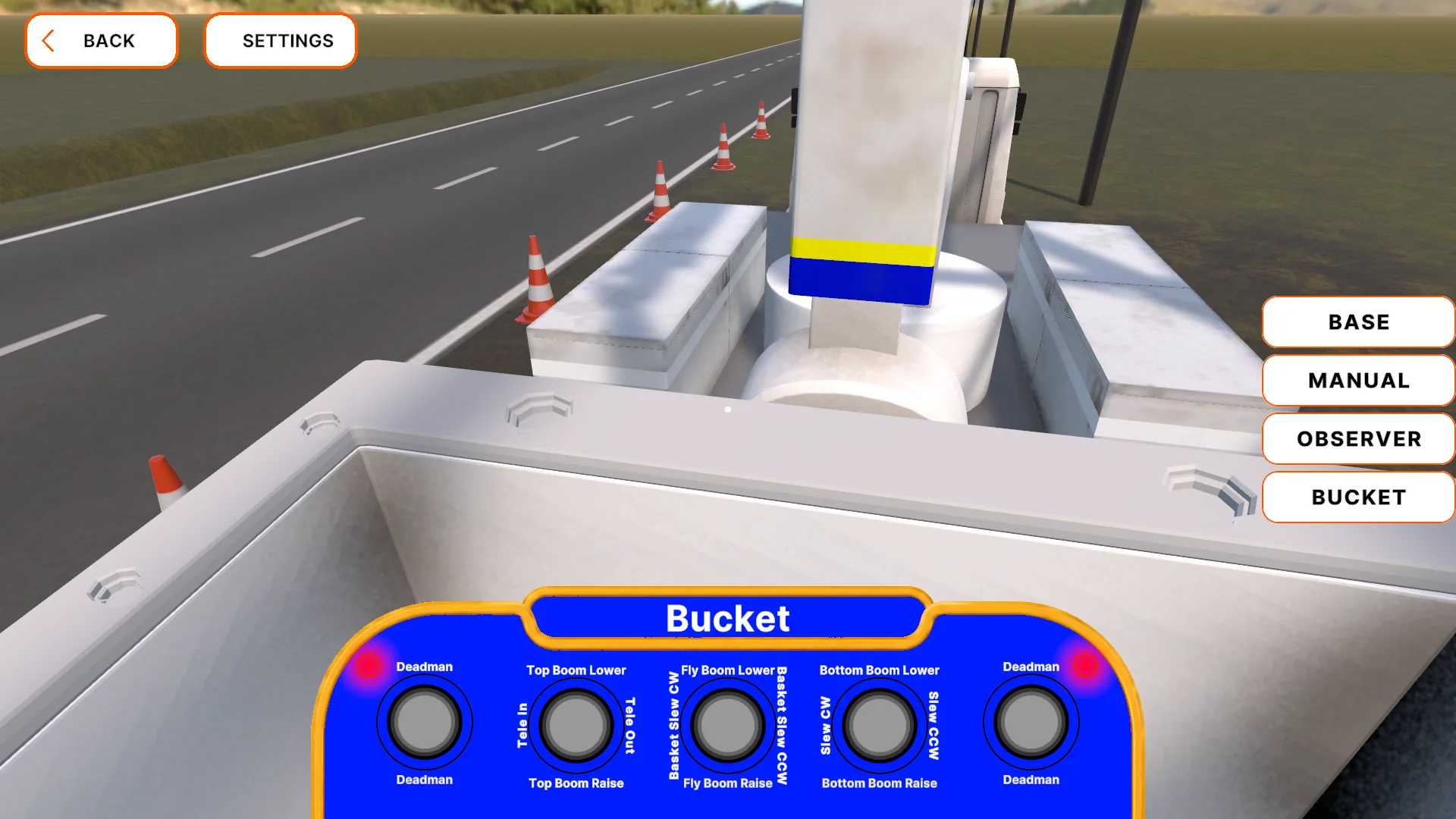
The simulation needed to represent truck-mounted equipment, suspended baskets and situations where a set of controls becomes unavailable. Users can move the basket, switch control positions and respond to hazards while working towards a defined rescue objective.
Browser delivery also shaped development. The 3D worksite and vehicle assets had to load through a WebGL application, so scene size and asset loading needed attention alongside the equipment interaction.
Configurable Rescue Scenarios
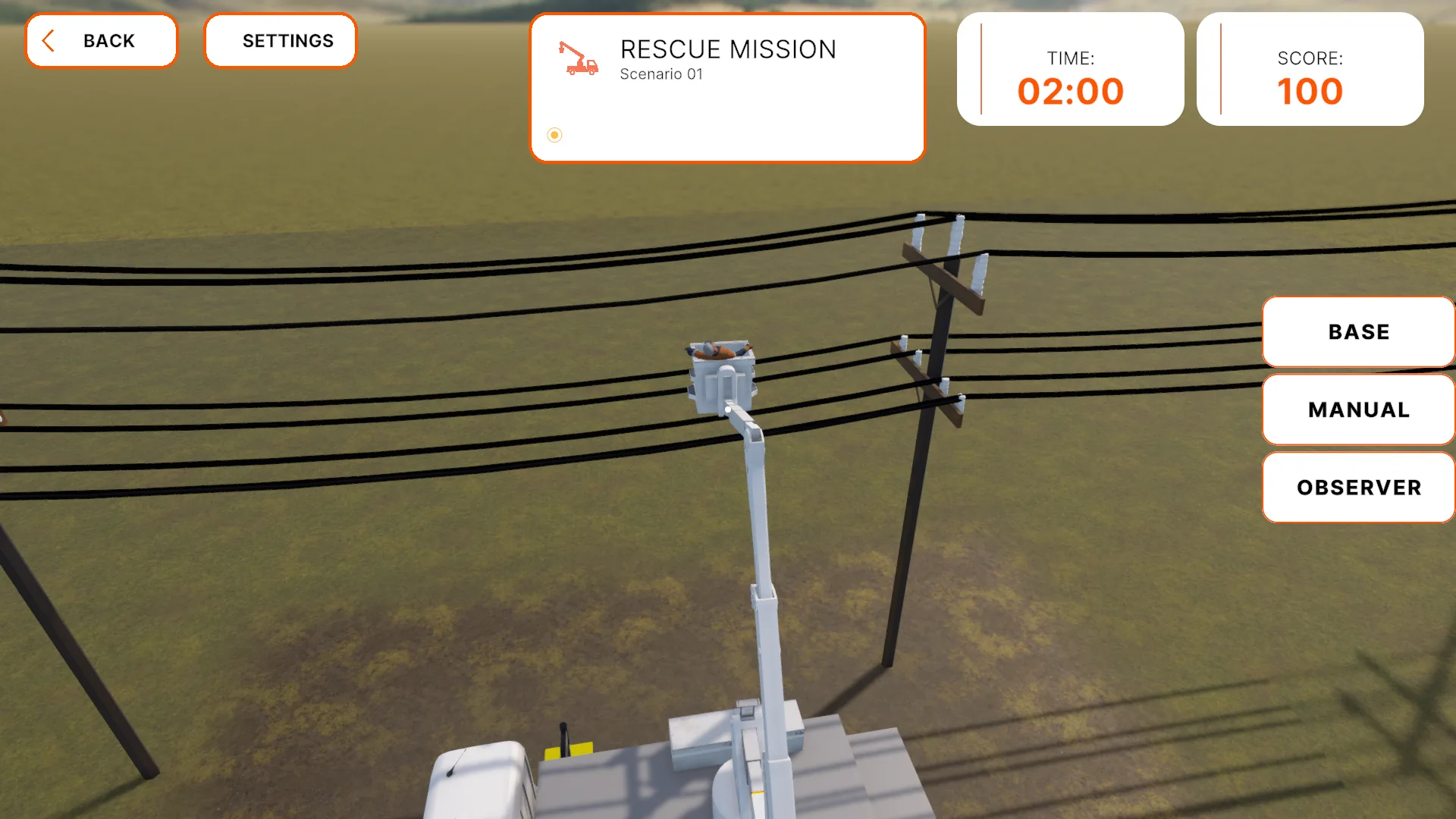
The simulator supports free operation and configured scenario runs, with hazard feedback, scoring, time limits and pass/fail conditions.
JSON scenario files define the selected truck, starting arm position, camera setup and available control points, together with the target zone and completion rules. One documented scenario disables the bucket controls, requiring the user to use another control position to lower the worker for extraction.
Keeping those rules in configuration lets the team adjust a scenario without rebuilding its behaviour as a separate application.
Multi-truck Control Routing
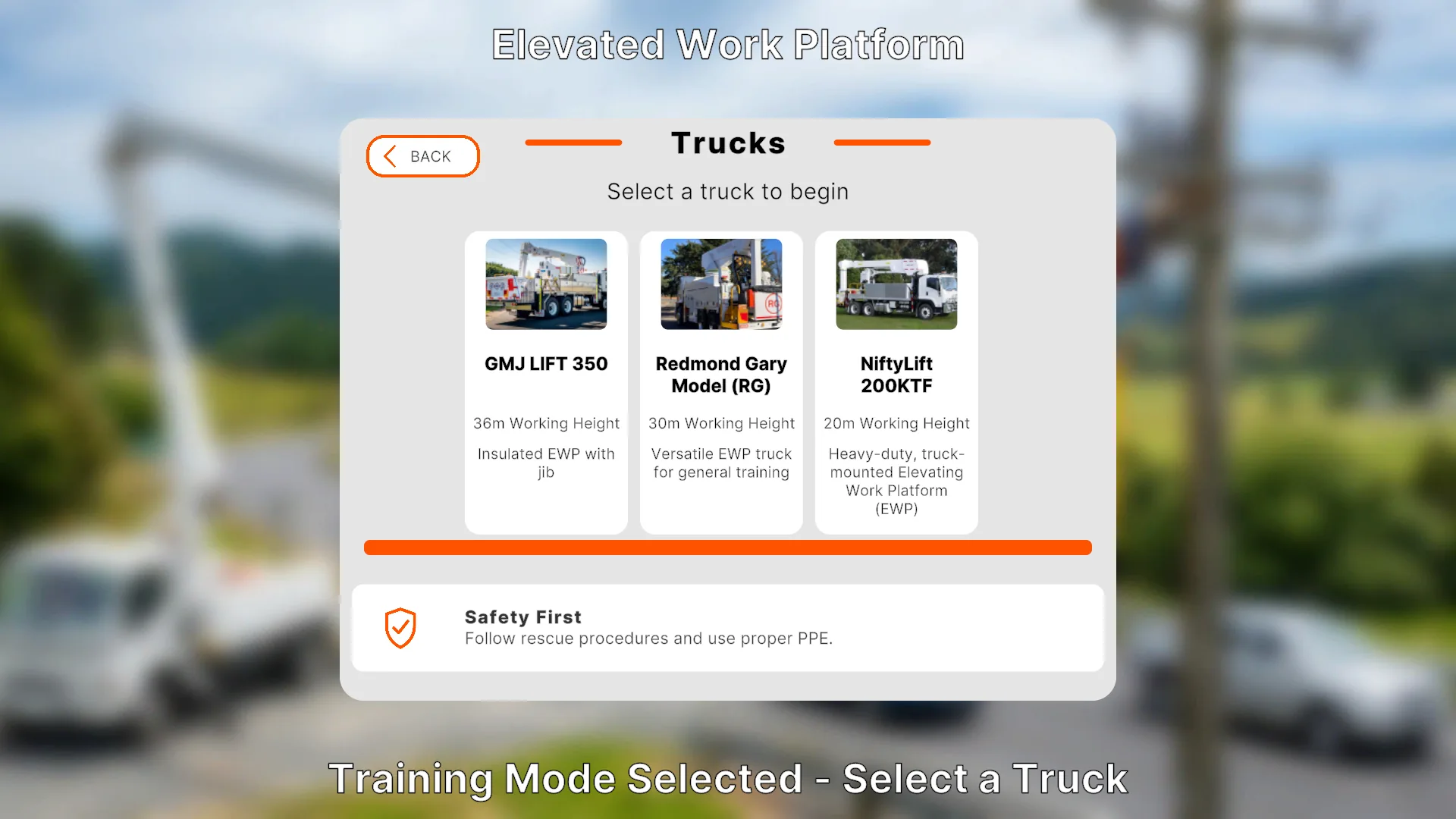
Different EWP rigs have different arm arrangements, including rotating booms, telescoping sections and basket pivots. Each vehicle needs its own movement behaviour while the user's controls need to stay consistent.
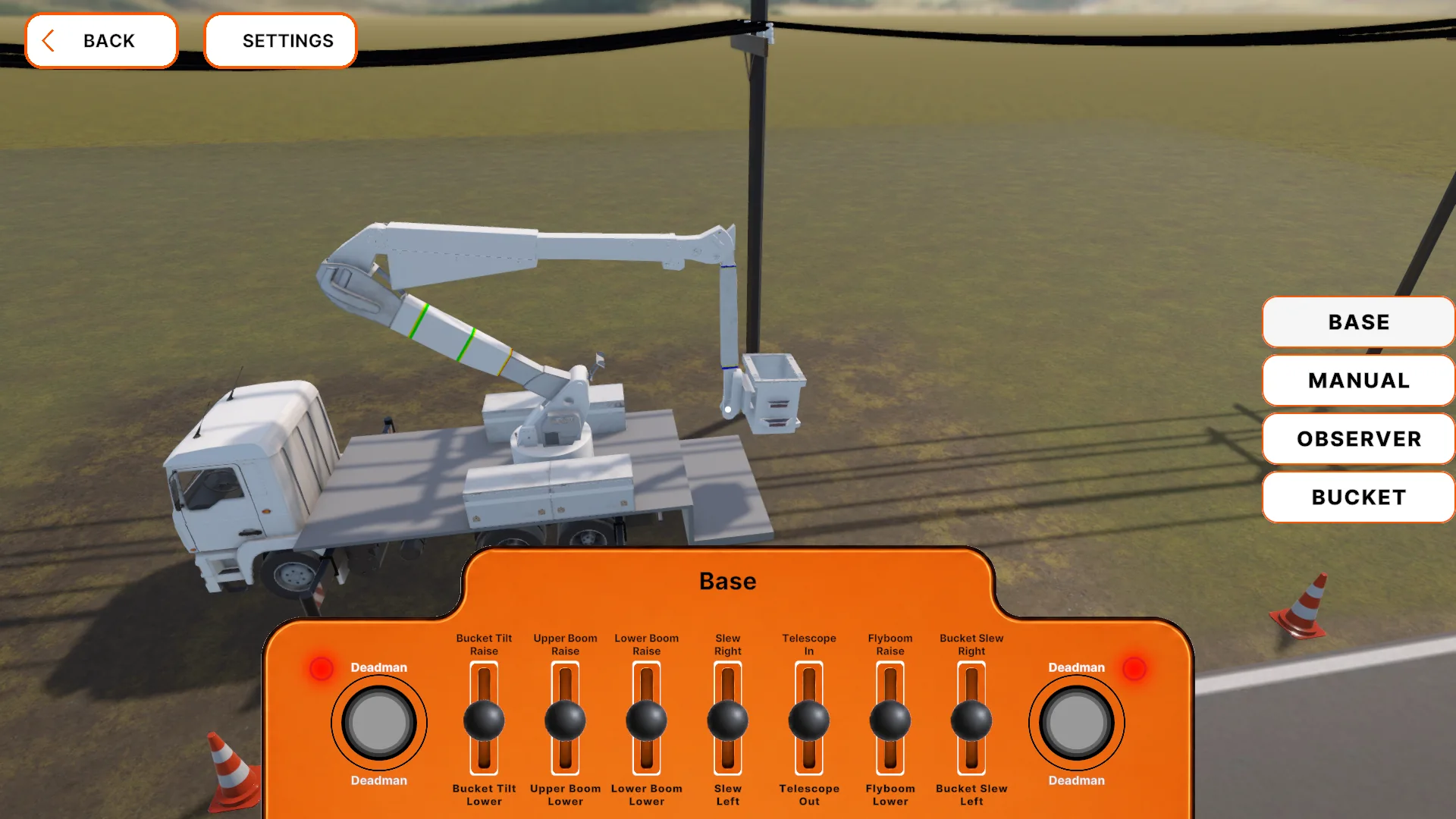
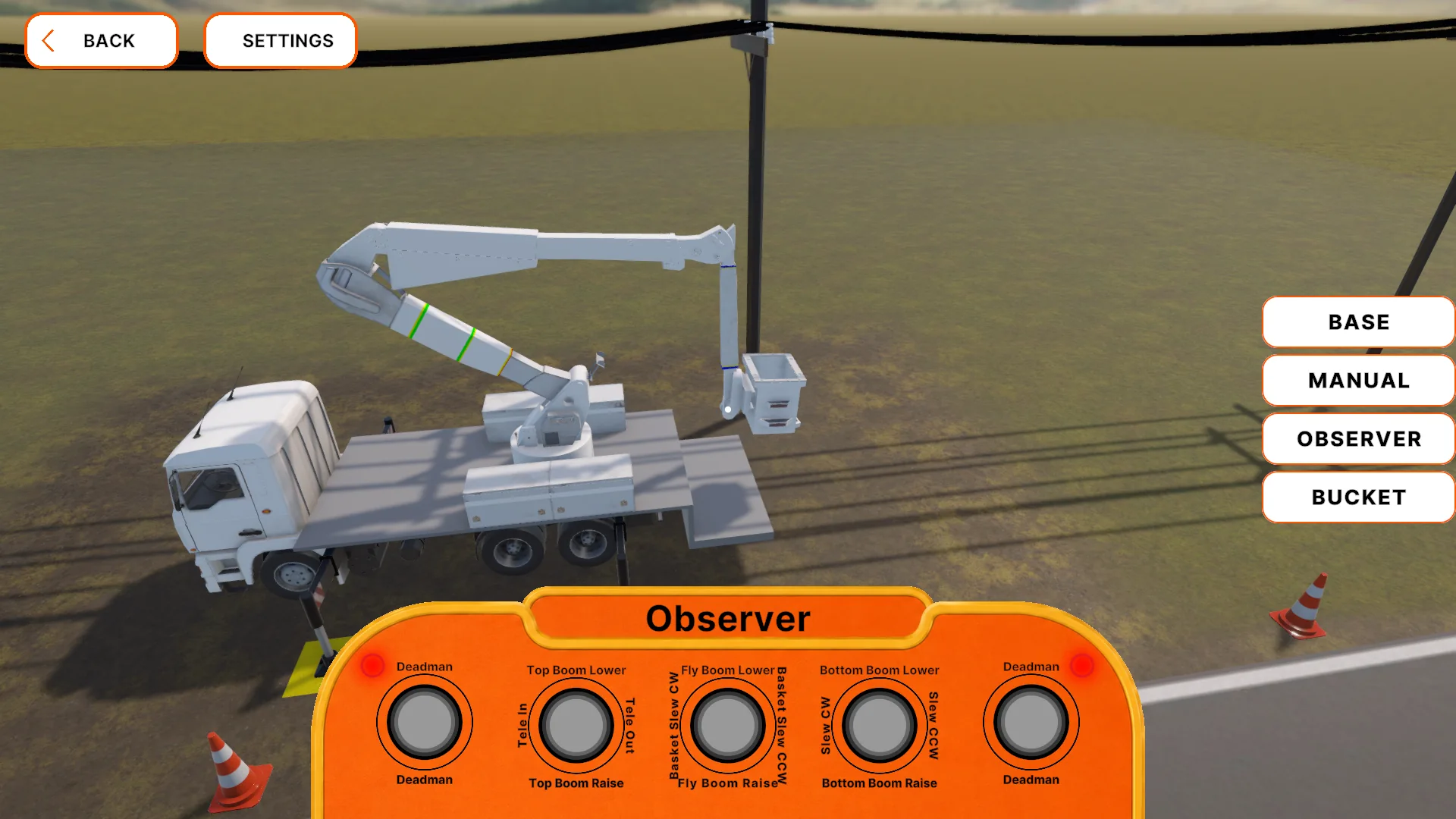
XGameDev built a routing layer that connects bucket, observer and base controls to the active rig. Cameras, scoring and scenario setup also read from that selected vehicle, so changing trucks does not require a separate interface.
Assessment Configuration and Results
Assessment configuration supports multiple attempts, random scenario selection and truck pools with defined pass conditions. The result model captures the attempt number, scenario and truck identifiers, score, time taken, hazard contacts, pass/fail result and timestamp.
A configurable reporting endpoint provides a connection point for future LMS or API integration. This keeps the assessment data model separate from the vehicle controls and scenario behaviour.
WebGL Engineering
The project uses dedicated WebGL build profiles for local testing, debug builds, remote QA and releases. Brotli compression forms part of the deployment flow, with a local test server configured to mirror the expected production headers.
We moved the heavier world content into Unity Addressables so the menu could load before the full simulation scene. Further optimisation removed unused packages and old model versions, reduced oversized textures and tightened import settings.
Delivered Capability
The February–October 2026 project produced an internal browser-based tool for exploring EWP operation and rescue scenarios. It combines vehicle controls with scenario rules and result capture in one application.
Additional truck configurations and rescue scenarios can use the same control-routing and scenario systems.
Related Services
See our training simulation development and Unity development services for related work, or instructional design services for interactive learning content.
Need an internal simulation tool?
Tell us which equipment and workflows the tool needs to represent, what data it should record, and where it has to run.